




Updated: 23.05.25

Is go-karting like driving a car? While go-karting’s raw thrill contrasts with the practicality of car driving, both share skills that enhance each other. Discover how go-karting skills improve road safety and make driving more enjoyable.
In this 2025 guide, we explore go-karting vs. car driving, uncovering similarities, differences, and transferable skills.
1. What Is Go-Karting?
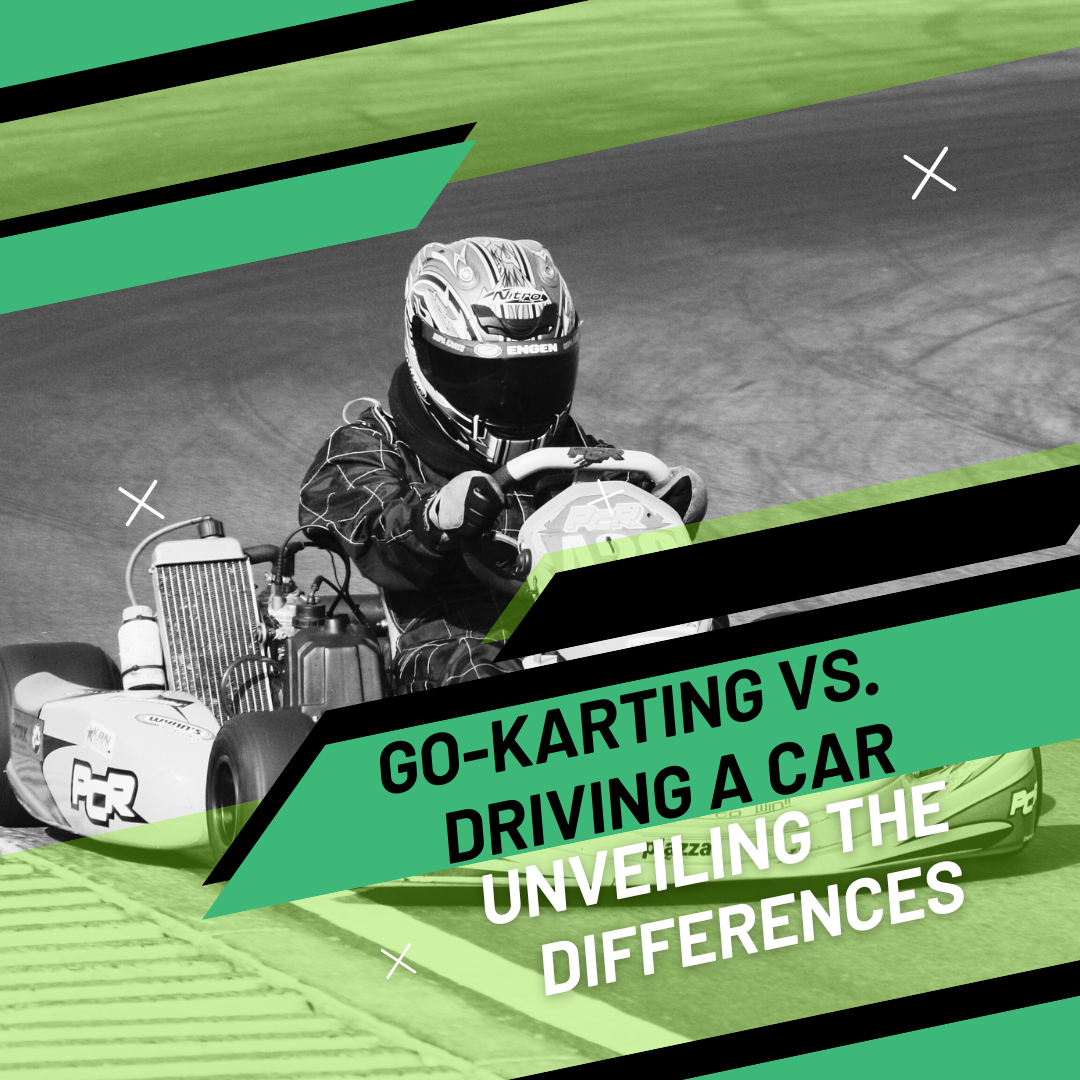
Go-karting (or “go-carting”) is a recreational motorsport using small, lightweight vehicles called go-karts. Unlike cars, go-karts are designed for racing on controlled tracks, offering a thrilling, accessible driving experience.
Anatomy of a Go-Kart
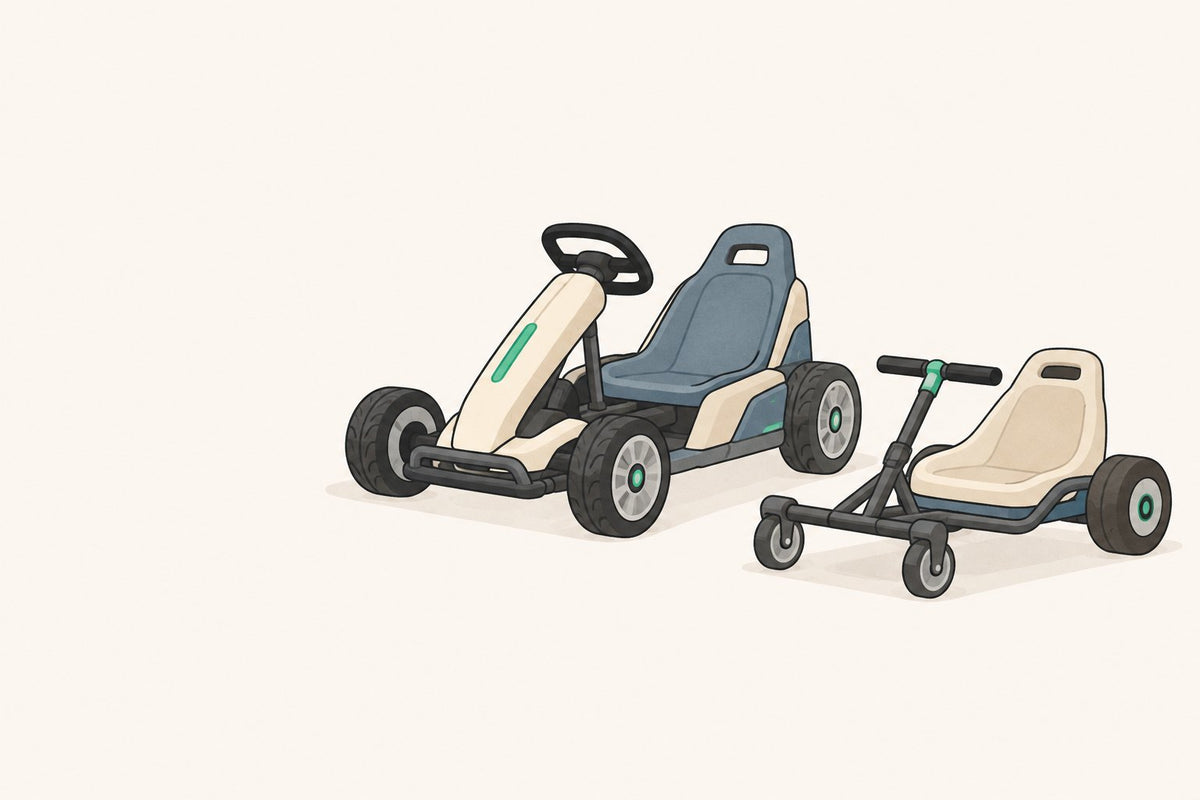
A go-kart is built for speed and agility, with a minimalist design and low center of gravity for sharp cornering. Key features include:
- Lightweight Design: Short wheelbase (50–150 kg) for agile handling.
- Essentials Only: Steering wheel, tires, brakes, engine/motor, and gas/brake pedals.
- Minimal Comfort: No suspension, plush seating, or stereo.
- Stability: Low center of gravity reduces rollover risk.
From kids’ pedal go-karts to electric go-karts and petrol go-karts, there’s a model for all ages. 
| Aspect | Go-Kart | Car |
|---|---|---|
| Weight | Lightweight (50–150 kg) | Heavier (1,000–2,000 kg) |
| Handling | Sharp, agile | Stable, smooth |
| Comfort | Minimal | High (seats, AC, stereo) |
| Safety Features | Basic (helmets, belts) | Advanced (airbags, ABS) |
| Purpose | Recreational racing | Daily commuting |
2. The Go-Karting Experience

Go-karting offers a raw, exhilarating experience, unlike the smoother feel of car driving. The direct steering and solid rear axle create a unique track connection. Learn how go-kart steering works. 
Curious about costs? Check out how much go-karts cost in the UK.
| Aspect | Go-Karting | Car Driving |
|---|---|---|
| Initial Cost | £200–£5,000 | £10,000–£50,000 |
| Maintenance | Low (£50–£200/year) | Moderate to high (£500–£2,000/year) |
| Fuel | Low (petrol/electric) | Moderate to high (petrol/diesel) |
| Insurance | Optional/low | Mandatory (£300–£1,500/year) |
| Licensing | None for recreational | Required (DVLA) |
3. Understanding Car Driving
Anatomy of a Car
Cars are built for practicality and comfort, unlike go-karts. They feature advanced systems like suspension, air conditioning, sound systems, and ABS brakes, making them ideal for daily commutes and long trips.
The Car Driving Experience
Car driving prioritizes utility over raw speed, designed for:
- Daily Commutes: Navigating city or suburban roads.
- Weekend Getaways: Comfort for short trips.
- Long-Distance Travel: Stability for highways.
Unlike go-karting’s controlled tracks, cars operate on unpredictable public roads. 
4. Go-Karting vs. Car Driving: Similarities
Is driving a go-kart like driving a car? Both offer the thrill of vehicle control, whether navigating a track’s tight corners or a road’s busy intersections. Skills from one enhance the other, distinct from professional car racing, which involves higher speeds and complexity.
Transferable Skills
Does go-karting help with driving? Yes, go-karting builds skills that improve car driving, especially for young drivers. No prior driving skills are needed for go-karting, making it an accessible starting point. Key skills include:
- Braking and Acceleration: Go-karting teaches precise control, improving road awareness (e.g., avoiding sudden stops).
- Cornering: Mastering track turns enhances handling on curved roads.
- Reflexes and Physics: Go-karting sharpens reaction time and teaches weight distribution, aiding safe driving.
- Car Driving to Karting: Road experience improves track anticipation (e.g., predicting other drivers’ moves).
Explore karting classes to hone these skills.
5. Key Differences
Is go-karting harder than driving? Go-karting requires precise control due to its direct steering and lack of assists (e.g., no ABS), making it more demanding in tight spaces. Cars offer forgiving handling with features like power steering. Other differences include:
- Setup: Go-karts are minimalist vehicles, not cars, with basic controls and no luxuries. Cars include comfort features like suspension and stereos.
- Weight: Go-karts (50–150 kg) are agile; cars (1,000–2,000 kg) prioritize stability.
- Environment: Go-karts race on controlled tracks; cars navigate diverse public roads.
| Skill | Go-Karting | Car Driving |
|---|---|---|
| Steering | Direct, immediate response | Smooth, power-assisted |
| Braking | Precise, no ABS | Controlled, with ABS |
| Acceleration | Quick, responsive | Gradual, smoother |
| Cornering | High skill, low margin for error | Forgiving, with traction control |
| Environmental Awareness | Track-focused | Traffic and pedestrian awareness |
6. Conclusion
Go-karting and car driving are distinct yet complementary, blending raw excitement with practical skills. Go-karting sharpens reflexes and control, enhancing road safety, while car driving improves track performance. Whether racing on a track or commuting, both offer unique thrills. Start with our kids’ go-karts for a safe, fun introduction!
Frequently Asked Questions
Is go-karting like driving a car?
Go-karting and car driving share skills like steering and braking, but go-karts are simpler, with direct controls and no assists, while cars offer comfort and safety features.
Does go-karting help with driving?
Yes, go-karting improves reflexes, braking precision, and cornering, enhancing road awareness and safe driving, especially for young drivers.
Is go-karting harder than driving?
Go-karting can be harder due to its direct steering and lack of assists like ABS, requiring precise control. Cars are more forgiving with advanced systems.
Can you go-kart without driving skills?
Yes, no driving skills are needed for recreational go-karting. Tracks provide briefings and beginner-friendly karts, making it accessible for all.
Is a go-kart a car?
No, a go-kart is not a car. Go-karts are lightweight vehicles for track racing, lacking the comfort and safety features of cars designed for public roads.

Share:
How Long Does A 12v Ride-on Battery Last?
Why Does A Carburetor Only Work With The Choke On?