



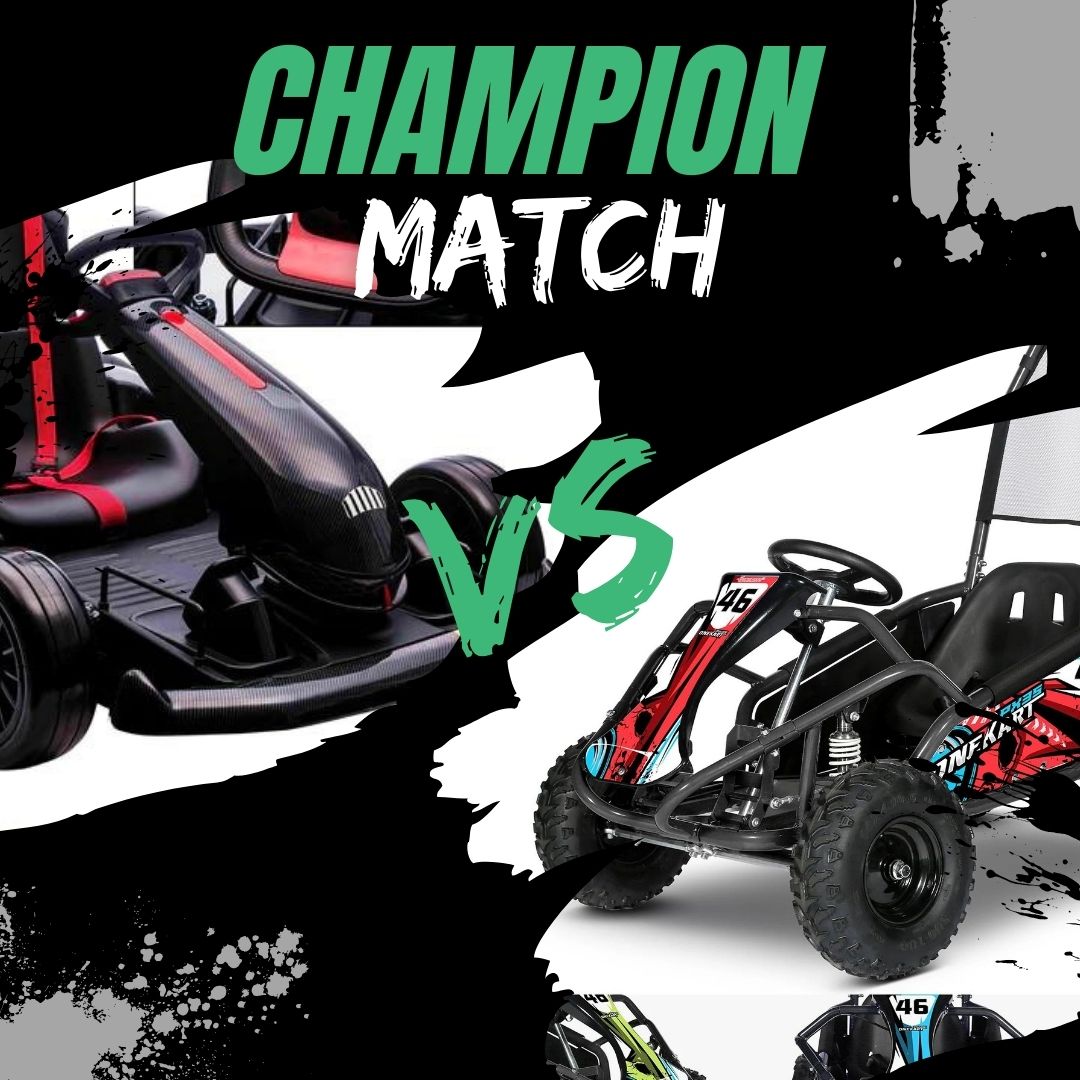
Choosing between an electric and a petrol go-kart comes down to how and where it will be used, who is driving and how much upkeep you want. In short, electric karts are quicker off the line, quieter, cleaner and cheaper to maintain; petrol karts have a higher top speed on a long straight, longer run time and the classic engine feel. For children at home, electric is usually the easier choice. Here is the detail, with the karts we have in stock today.
At a glance
| Electric | Petrol | |
|---|---|---|
| Acceleration | Instant torque, quick off the line | Builds speed more gradually |
| Top speed | Generally lower | Generally higher |
| Noise | Quiet | Loud |
| Emissions | None from the kart | Exhaust fumes |
| Maintenance | Few moving parts, battery care | Oil changes, tune-ups, fuel |
| Running cost | Charging is cheap | Fuel and servicing add up |
| Run time | Limited by battery, then recharge | Refuel and go |
| Good for | Gardens, indoor tracks, learners | Open tracks, experienced riders |
Our go-karts and drift karts in stock
Age and rider weight come from each kart's manual; speeds are the top of the "Speed:" range in each listing's description. Petrol karts are for private land only. Prices and stock checked on 19 November 2026.
| Kart | Power | Age (manual) | Rider weight limit (manual) | Top speed (listing) | Price |
|---|---|---|---|---|---|
| RiiRoo VoltRacer 12V electric go-kart | 12V | 3 to 8 years | 30 kg | 4 km/h (2 mph) | £79 |
| VoltRacer 24V drift kart | 24V | 8 to 12 years | 50 kg | 15 km/h (9 mph) | £189 |
| RiiRoo MaxDriftz electric go-kart | 24V | 8 to 12 years | 70 kg | 13 km/h (8 mph) | £229 |
| Audi Beat Blaze drift kart (licensed) | 24V | 6+ | 50 kg | 8 km/h (5 mph) | £229 |
| SpeedStorm drift kart | 24V | 6+ | 50 kg | 12 km/h (7 mph) | £249 |
| VenomRacer 24V go-kart | 24V | 6 to 8 years (73 to 96 months) | 50 kg | 5 km/h (3 mph) | £249 |
| McLaren drift go-kart (licensed) | 24V | 6+ | 60 kg | 12 km/h (7 mph) | £329 |
| BMW drift kart (licensed) | 24V | 6+ | 60 kg | 12 km/h (7 mph) | £349 |
| RiiRoo VoltDrift kart | 24V | 8 to 12 years | 70 kg | 12 km/h (7 mph) | £369 |
| OneKart EX3S 48V electric go-kart buggy | 48V 1000 W | 13+, adult supervision 16 and under | 68 kg | 30 km/h (19 mph) | £799 |
| OneKart PX3S 98cc petrol go-kart buggy | 98cc petrol | 13+, adult supervision 16 and under | 68 kg | 37 km/h (23 mph) | £749 |
| MaxLiftz 750 Duo 48V two-seater kart | 48V | 14+ | 100 kg | 18 km/h (11 mph) | £500 |
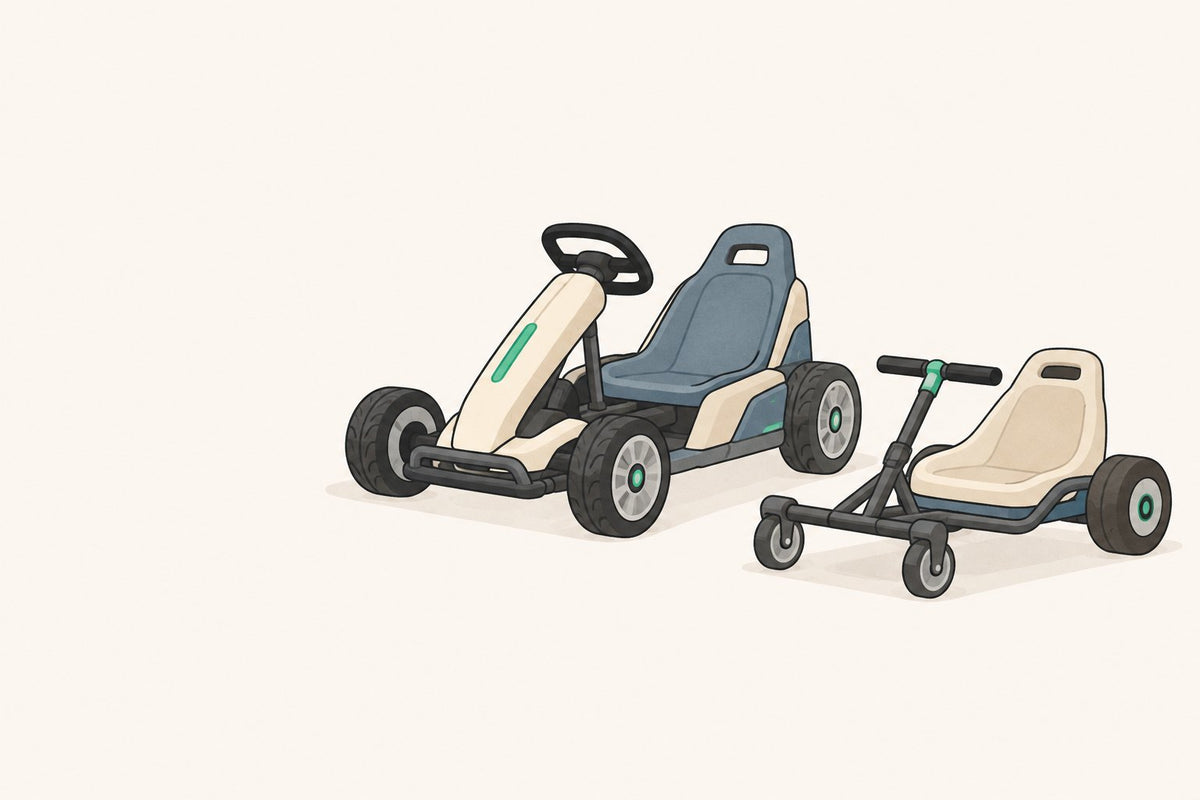
See kids' electric go-karts and kids' electric drift karts. Drift karts are built for sliding fun rather than outright speed. For petrol, see the OneKart PX3S 98cc.
Which is faster?
Electric go-karts get away quickly because the motor delivers full torque instantly. Petrol karts usually reach a higher top speed but take longer to build up to it, which is why electric karts shine on twisty tracks and petrol karts on long straights. Handling is a factor too: batteries add weight low down, which can feel stable in corners, while petrol karts are generally lighter. The driver counts as much as the kart.
To keep it in proportion, the big speeds you read about (adult and racing karts) are not kids' karts. The fastest kids' karts in the table above are listed at 30 km/h (about 19 mph) for the OneKart EX3S 48V electric and 37 km/h (about 23 mph) for the OneKart PX3S 98cc petrol, and our drift karts at 8 to 15 km/h. For electric kart speeds in more detail, read how fast do electric go-karts go, and for faster models see our fastest ride-ons.
Emissions and the environment
Petrol karts produce carbon monoxide and nitrogen oxides, which affect air quality and add to climate change; they also risk fuel spills. Electric karts produce no emissions from the kart itself, which is why they suit indoor tracks and places with limited ventilation. See are go-karts bad for the environment.
Maintenance and running costs
Electric karts have fewer moving parts and need little more than battery care and charging, which is relatively cheap and gives predictable running costs. Petrol karts need oil changes, tune-ups and part replacements, plus fuel, so the running cost is higher over time. Electric karts can cost more up front because of the battery and motor. Read go-kart maintenance and safety.
Health and noise
Exhaust fumes can aggravate breathing and heart conditions, which matters for drivers and spectators, especially indoors. Petrol karts are loud and can disturb neighbours; electric karts are much quieter, which makes them better for residential areas.
Practical aspects of running an electric kart
Run time varies with the kart, the battery and how hard it is driven. Spare batteries and a charging plan keep the fun going. For our own karts, check the listing for run time, and our charging guide.
Casual use or competitive racing?
- Casual use: electric is generally more suitable (easy controls, quiet, low maintenance); petrol offers longer run time and the traditional feel.
- Competitive racing: it depends on the format. Electric offers instant acceleration and consistent performance; petrol offers higher top speeds, lighter handling and longer races. Leagues often run separate classes for each.
Safety
Electric karts generally have a lower centre of gravity because of the battery position, which can improve stability, and instant torque makes speed control precise for younger or less experienced drivers. Petrol karts are well established, often with robust harnesses, roll bars, emergency cut-offs and secure fuel tanks. Whichever you choose, a helmet, gloves and suitable clothing are essential, and a child should be supervised. Teach kart operation, track rules and, for petrol, safe fuel handling. For ages and weight limits, follow the kart's manual rather than a general rule.
Rules and regulations
Go-karts are for private land and tracks, not public roads. Track operators set their own age, height and weight limits. Racing leagues set classes for electric and petrol karts.
Looking ahead
Battery technology is improving (faster charging, longer lifespan), and electric karts are getting more capable. Petrol karts continue to evolve too.
FAQs
Are electric go-karts faster than petrol?
Off the line, often yes. Top speed on a long straight is usually higher on petrol. For kids' karts, speeds are modest either way; see the table.
What is the average lifespan of an electric go-kart's battery?
It varies with the battery type, use and how it is charged and stored; see our battery lifespan guide.
Can electric go-karts be used in wet weather?
Most are not designed for wet conditions or standing water; follow the manual and keep the battery dry.
What are the environmental benefits of electric over petrol?
No exhaust from the kart, less noise and no fuel spills.
Why do some people prefer petrol karts?
The sound, the feel and the longer run time.
Which type is easier to maintain?
Electric: fewer moving parts. Petrol: oil changes and tune-ups.
Any downsides to electric karts?
They need charging between sessions, so spare batteries or a charging plan help.
What is the recommended age and weight for a kids' kart?
It depends on the model: follow its manual. Per their manuals, our 24V drift karts are 6+ or 8 to 12 years, the VenomRacer 6 to 8 years, the VoltRacer 12V 3 to 8 years, the OneKart models 13+ and the MaxLiftz two-seater 14+; weight limits are in the table.
Are there height limits at go-karting centres?
Many venues set height or age limits for junior karts; check with the venue.
What are the benefits of go-karting for kids?
Fitness, social skills and responsibility.

Share:
What Is A Pedal Go Kart?
What Are The Different Categories Of Karting?